Killarney National Park at a Glance
Ireland's first national park opened in 1932, after Arthur Vincent and his wife's parents donated the Muckross Estate to the Irish state as the Bourn Vincent Memorial Park. It now covers roughly 10,236 hectares of lake, bog, oak and yew woodland and mountain, folded around the three Lakes of Killarney just south and west of Killarney town. UNESCO named it a Biosphere Reserve in 1981, a nod to a mix of habitats found nowhere else in the country, including the largest yew woodland in Western Europe.
Getting in costs nothing. The park has 24-hour pedestrian access year-round, and the free exhibition at Killarney House is a good first stop for maps and orientation — see our full history and visitor overview for more background. A handful of sites inside do charge admission separately: Muckross House, the Ross Castle tower tour, and the Traditional Farms all sell their own tickets, covered below. The N71 road runs straight through the park on its way to Kenmare, passing most of the big sights along the route.
The Park's Signature Landmarks & Attractions
The sights below cluster into three areas: around Knockreer near town, the Muckross estate a few kilometres south, and the mountain viewpoints further along the N71 toward Kenmare. Most people mix and match depending on how much walking they want to do.
Killarney House & Gardens (Knockreer)
Killarney House sits at the edge of town and doubles as the park's visitor centre, with a free exhibition covering history, wildlife and trail options. Its walled gardens and the surrounding Knockreer estate look out over Lough Leane to the Reeks, making it a sensible first stop before heading deeper into the park. The centre runs roughly 9:15am to 5:15pm, closed for lunch between 1 and 2pm.
Ross Castle
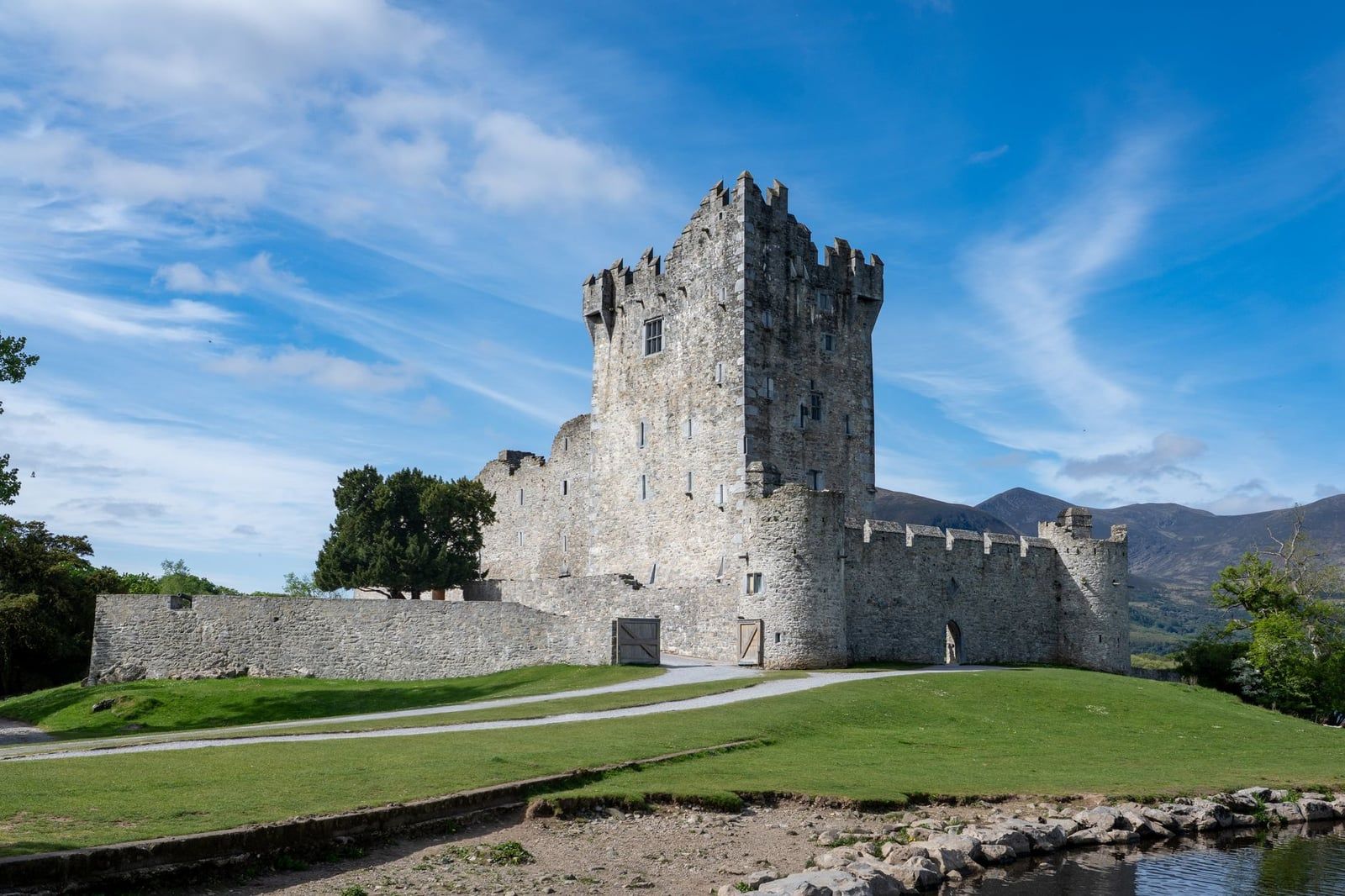
A 15th-century tower house on the shore of Lough Leane, restored and furnished to give a sense of how an Irish chieftain's stronghold once looked. Guided interior tours run seasonally for around €5 a head; the exhibition and grounds are free. It's also the departure point for lake boat trips, and the walk out from town along Ross Road is flat and easy going.
Muckross House and Gardens
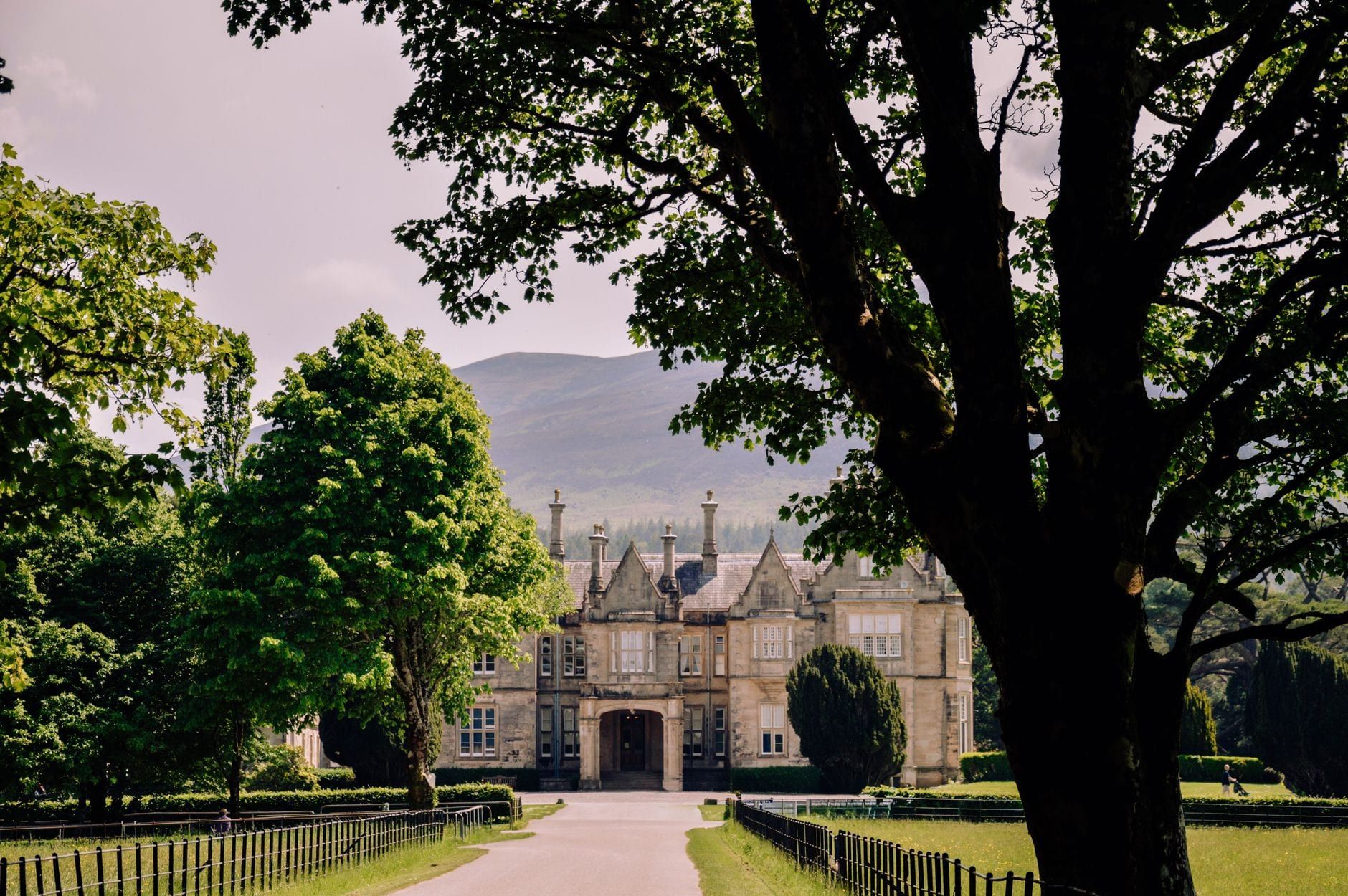
Built in 1843, this 65-room Victorian mansion hosted Queen Victoria in 1861 and now runs as a period house museum beside Muckross Lake. Adult admission is €9 for the house alone, or €18 for a joint ticket that includes the Traditional Farms — worth it if you're doing both in the same day. The Rock Garden, Sunken Garden and Stream Garden ring the house and are free to wander even without a house ticket.
Muckross Abbey
A Franciscan friary founded around 1448, a short walk from Muckross House and free to enter. Its roofless cloister centres on a yew tree said to be as old as the abbey itself, ivy climbs the window frames, and local poets and chieftains are buried in the surrounding graveyard. Give it twenty minutes. It's small, but it lingers with you.
Muckross Traditional Farms
Working farm buildings recreate rural Kerry life from the 1930s and 40s, with animals, turf fires and costumed guides demonstrating trades that had mostly disappeared by the 1970s. Entry is €11 alone or €18 combined with Muckross House. It's a good option for kids who've had enough of walking for one day.
Torc Waterfall
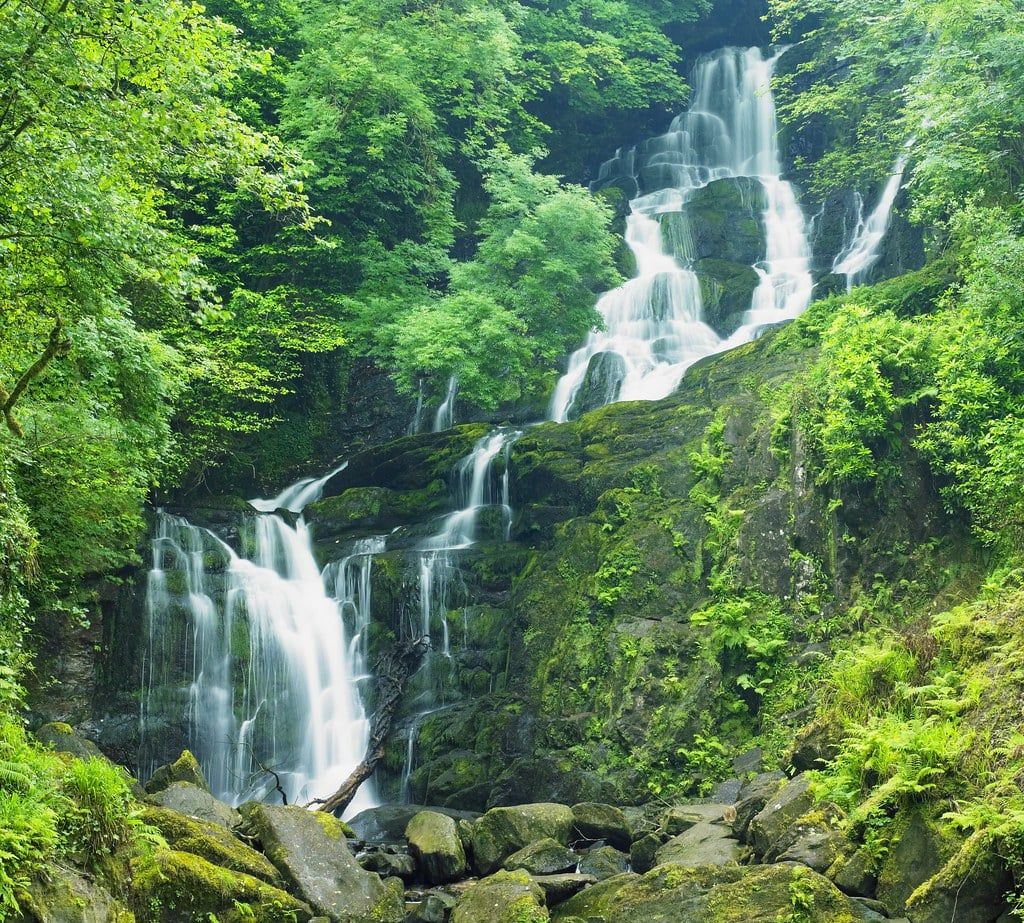
Water drops 20 metres over a mossy rock face, fed by a stream that runs a further 110 metres downhill through oak woodland. The main viewing point is a 5-10 minute walk from its own car park off the N71, about 7km from Killarney town — get there before mid-morning if you want the platform to yourself. Fitter visitors can keep climbing toward the Torc Mountain summit trail, covered below.
Innisfallen Island
A ruined monastery, founded in the 7th century, occupies this small island in Lough Leane and is reachable only by boat. Boats leave roughly hourly from Reen Pier near Ross Castle between 10am and 5pm, carry around 12 passengers, and the round trip with time ashore runs about 90 minutes. Our guide to Killarney's three lakes covers the crossing and the other two lakes in more depth.
Gap of Dunloe
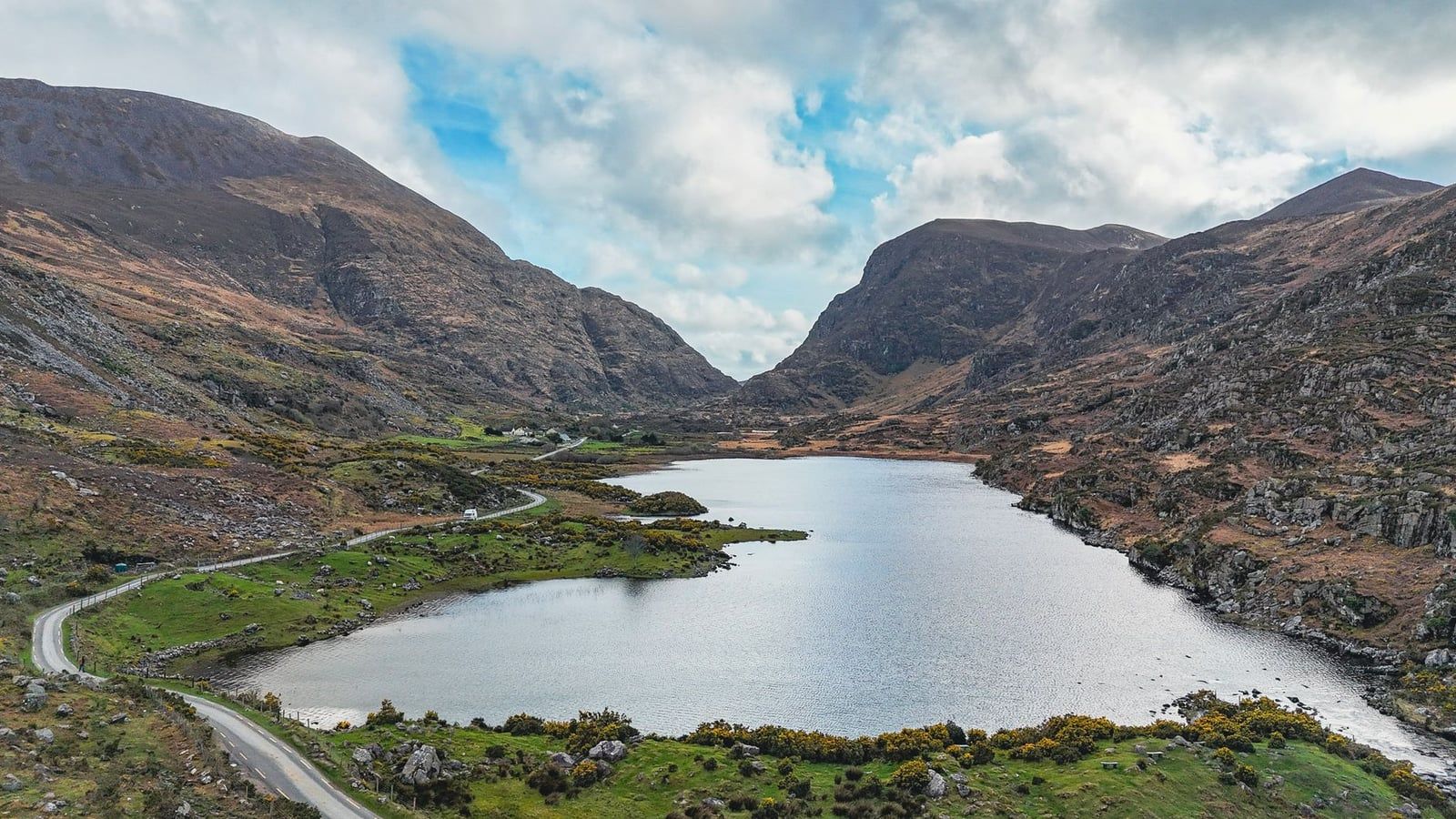
This glacial pass between MacGillycuddy's Reeks and Purple Mountain sits just outside the park's official boundary, but skipping it would be a mistake. Almost every multi-day itinerary includes it anyway. Walk, cycle or take a jaunting car from Kate Kearney's Cottage through the pass, with the River Loe running alongside and the mountains closing in on both sides.
Ladies View & Molls Gap
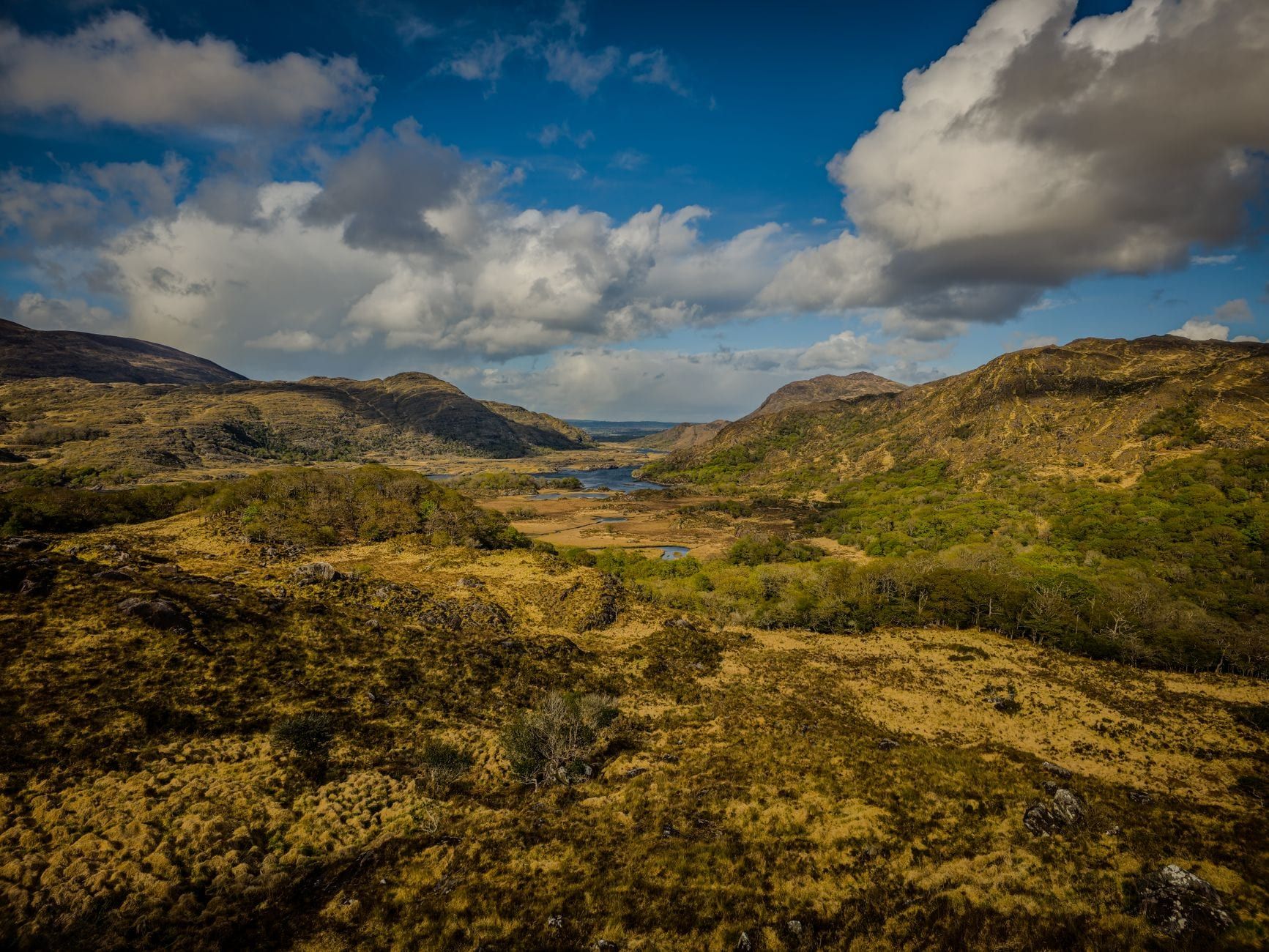
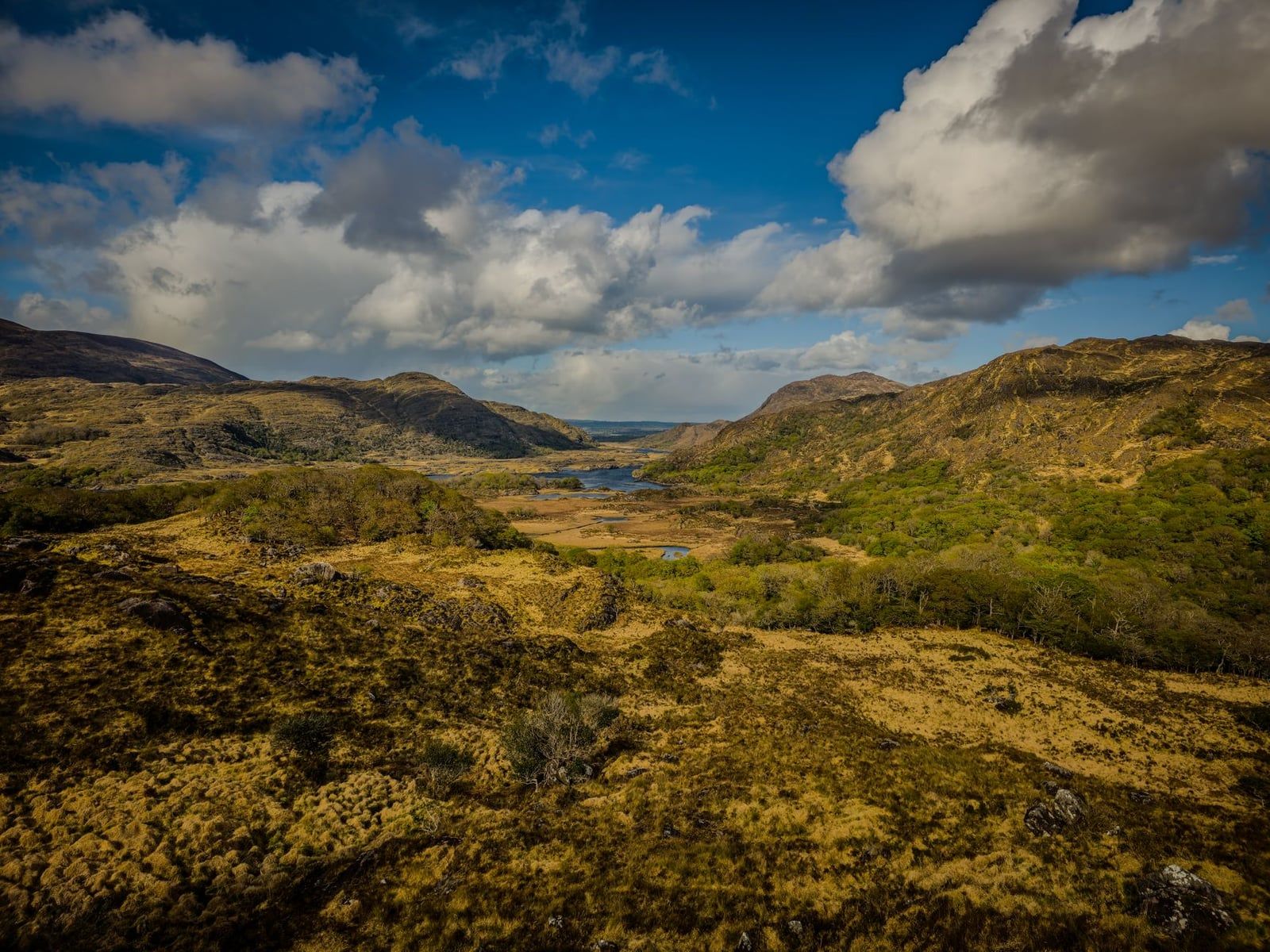
Two roadside viewpoints on the N71 toward Kenmare, both overlooking the Upper Lake and the Reeks. Ladies View takes its name from Queen Victoria's ladies-in-waiting, who stopped here during her 1861 visit and admired the panorama enough that the name stuck. Molls Gap, a few kilometres further on, has a café and craft shop worth a short stop.
Best Walks & Hikes for Every Fitness Level
The park's marked trail network is separate from the sightseeing list above, and it's one of the main reasons people come. Every route starts from a free car park at Knockreer, Muckross or Torc, so you can pick one to match your legs and your schedule that day.
| Trail | Distance | Difficulty |
|---|---|---|
| Old Boathouse Trail | 1 km | Easy |
| Lakeside Walk (Muckross) | 3 km | Easy |
| Knockreer Circular | 5 km | Easy-moderate |
| Arthur Young's Walk | 3 km | Moderate |
| Mossy Woods / Dinis Cottage & Old Weir Bridge | 5 km | Moderate |
| Old Kenmare Road | 7 km one-way | Strenuous |
The Knockreer Circular starts and ends at Killarney House, with open views of Lough Leane and the Reeks the whole way round. The Mossy Woods route takes in Dinis Cottage and the Old Weir Bridge, a stone crossing where the Upper Lake narrows into the middle lake. The Old Kenmare Road is the strenuous option here, and it also forms part of the long-distance Kerry Way if you want to keep going past the park boundary.
Torc Mountain: A Step Up
From the Torc Waterfall car park, a stepped path climbs to join the mountain trail; the round trip runs about 8km and gains real elevation. The payoff is a view over Muckross Lake and the Reeks that the waterfall crowd never sees. Allow three to four hours, wear proper boots, and expect the top stretch to be exposed peat and rock. For distances and grades on every marked trail, our complete trail guide breaks it down by difficulty.
Carrauntoohil and the Reeks
Ireland's highest peak, Carrauntoohil, rises just over 1,000 metres in the MacGillycuddy's Reeks on the park's western edge. It isn't a marked park trail. The usual route via the Devil's Ladder is a full mountain day for experienced hikers with proper gear, not a casual add-on to a park visit. Attempt it only if you've done a similar scramble before, and always tell someone your planned route.
Active Adventures: Cycling, Boating, Jaunting Cars & More
Walking isn't the only way through the park. Bikes, boats and horse-drawn traps cover the same ground faster, and each suits a different kind of visitor.
Cycling
Killarney town has several bike rental shops, and the park has a network of surfaced cycle tracks through Muckross, Knockreer and Ross Island that stay flat enough for casual riders. Off-road cycling isn't allowed, so stick to the signed routes and give way to walkers. Our guided bike tours cover the same ground with someone else handling the route and the logistics.
Jaunting Cars
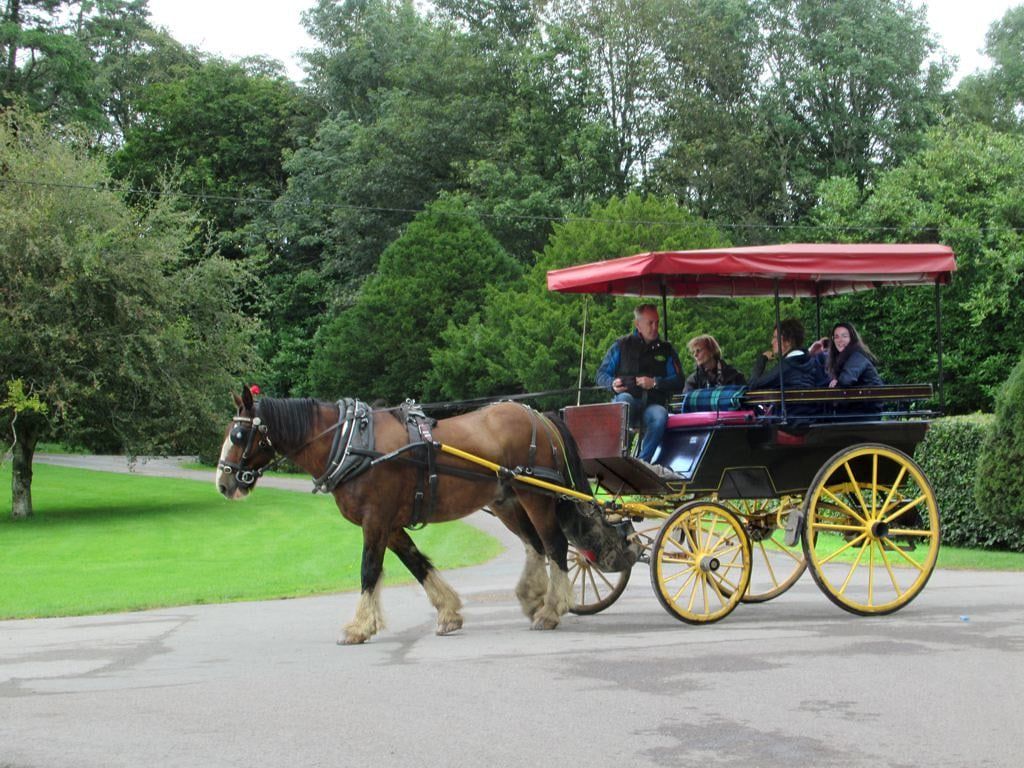
A jaunting car is a traditional horse-drawn trap, driven by a local jarvey who narrates the history as you go. Set routes link Muckross Abbey to Muckross House, Muckross House to Torc Waterfall, and through the Gap of Dunloe. It's a good call if walking isn't practical, or you'd simply rather listen than navigate. See our jaunting car tour options for routes and current prices.
Boating and Kayaking
A one-hour boat tour of the lakes from Ross Castle costs around €17 and loops through all three Lakes of Killarney. Canoes and kayaks are allowed on the water too, but you need a free permit first, and your vessel has to be power-washed beforehand to stop invasive species spreading between lake systems.
Fishing and Swimming
Lough Leane holds salmon and trout, and most anglers fish from their own boats rather than the shore. Swimming is possible at Muckross Lake's Goleen shore, but there's no lifeguard, the lake drops away suddenly close to the bank, and inflatables are banned there for safety. Keep a close eye on kids the whole time.
Planning Your Visit: Getting There, Getting Around & How Much Time You Need
Kerry Airport is about 15-20 minutes from Killarney by taxi, Cork is roughly 1 to 1.5 hours away by car or bus, and Dublin is about 3 to 3.5 hours by car or direct train. Our directions and transport guide breaks down every route in detail, including train and coach times.
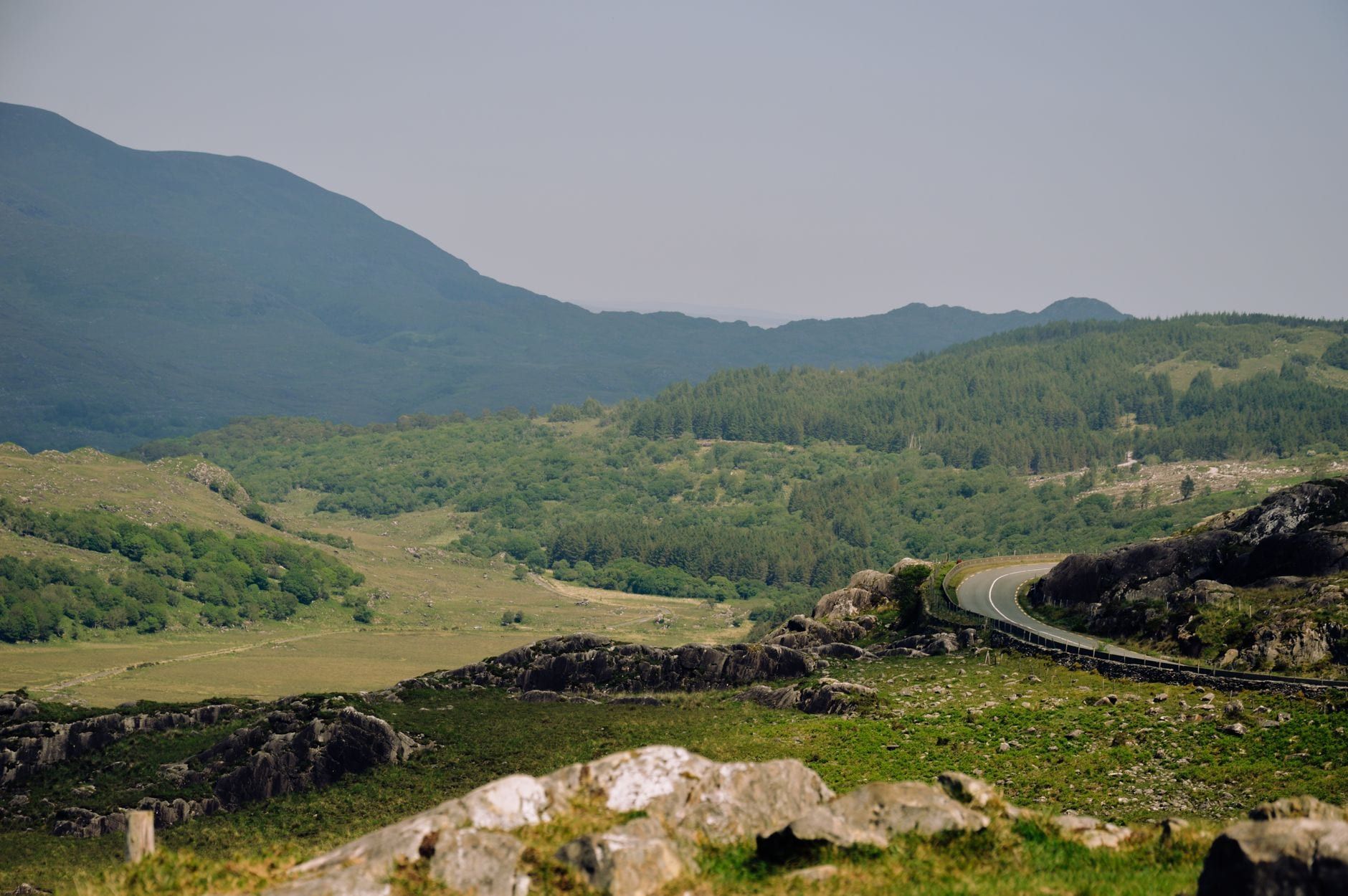
Driving through the park is limited to a handful of car parks at Ross Castle, Muckross and Torc; beyond that you're on foot, bike or jaunting car. The N71 itself does run through the park, connecting Killarney to Kenmare and passing many of the sights above. A hop-on hop-off bus covers most key stops but doesn't reach the Gap of Dunloe, so plan a car, bike or jaunting car for that stretch instead.
The Visitor Centre at Killarney House runs 9:15am to 5:15pm, closed 1 to 2pm for lunch. Attraction hours shift with the season, so check current opening hours and admission prices before you travel.
- Half day: Ross Castle, Muckross House and Abbey, near Killarney town.
- Full day: add Torc Waterfall and the Gap of Dunloe.
- Two days: add the Old Kenmare Road or a Carrauntoohil attempt.
Best Time to Visit, Wildlife & Practical Tips
May to September brings the mildest weather and the longest daylight for exploring, though July and August are also the busiest months. Locals often prefer late March into April, or September and October, when the trails are quieter and still green. Our season guide to autumn in the park covers what changes month to month. Rain shows up year-round here regardless of season, so pack for it whenever you go.
Torc Waterfall and Ross Castle fill up once the tour buses arrive mid-morning. Get there before 10am and the paths are often nearly empty.
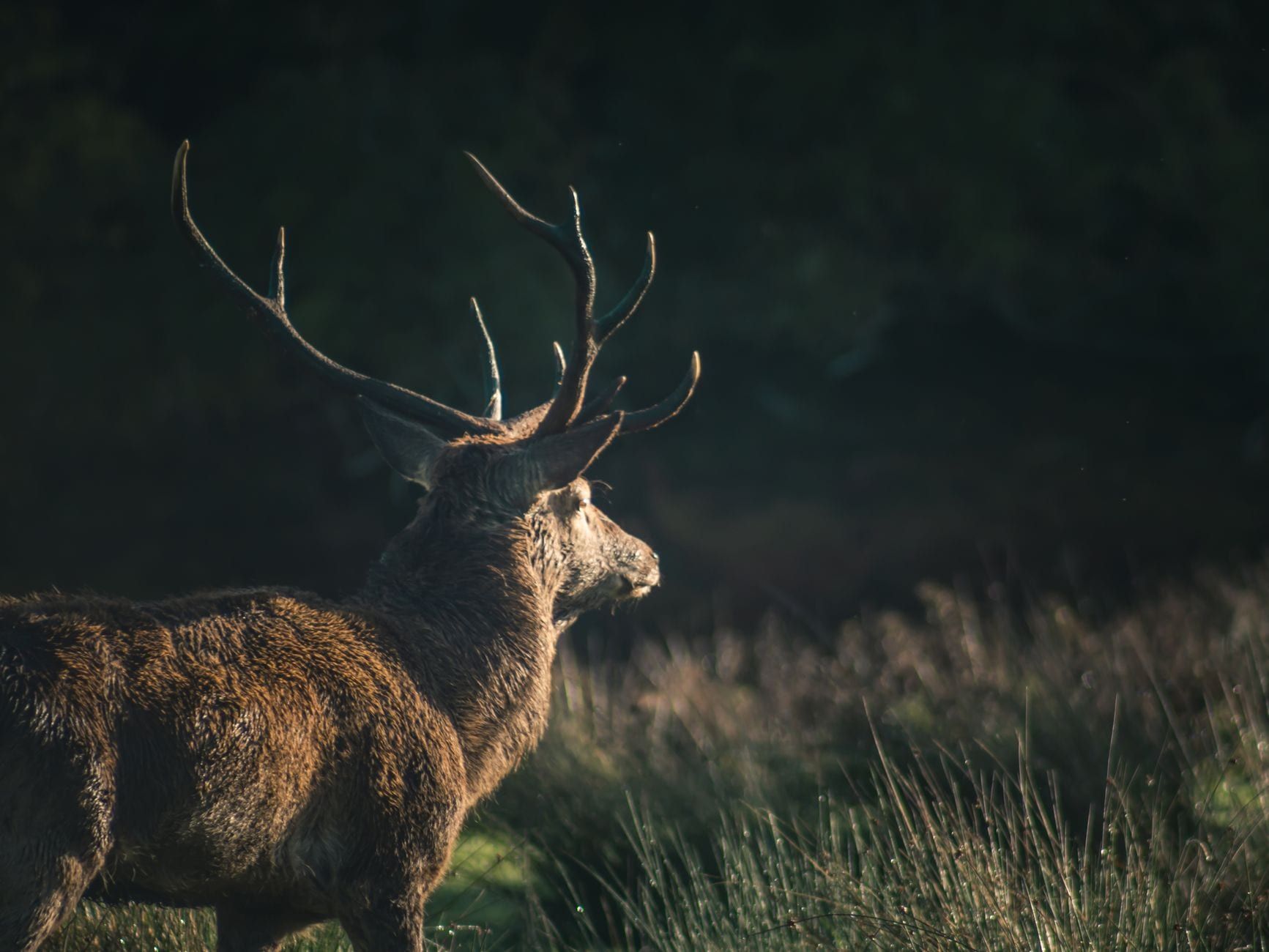
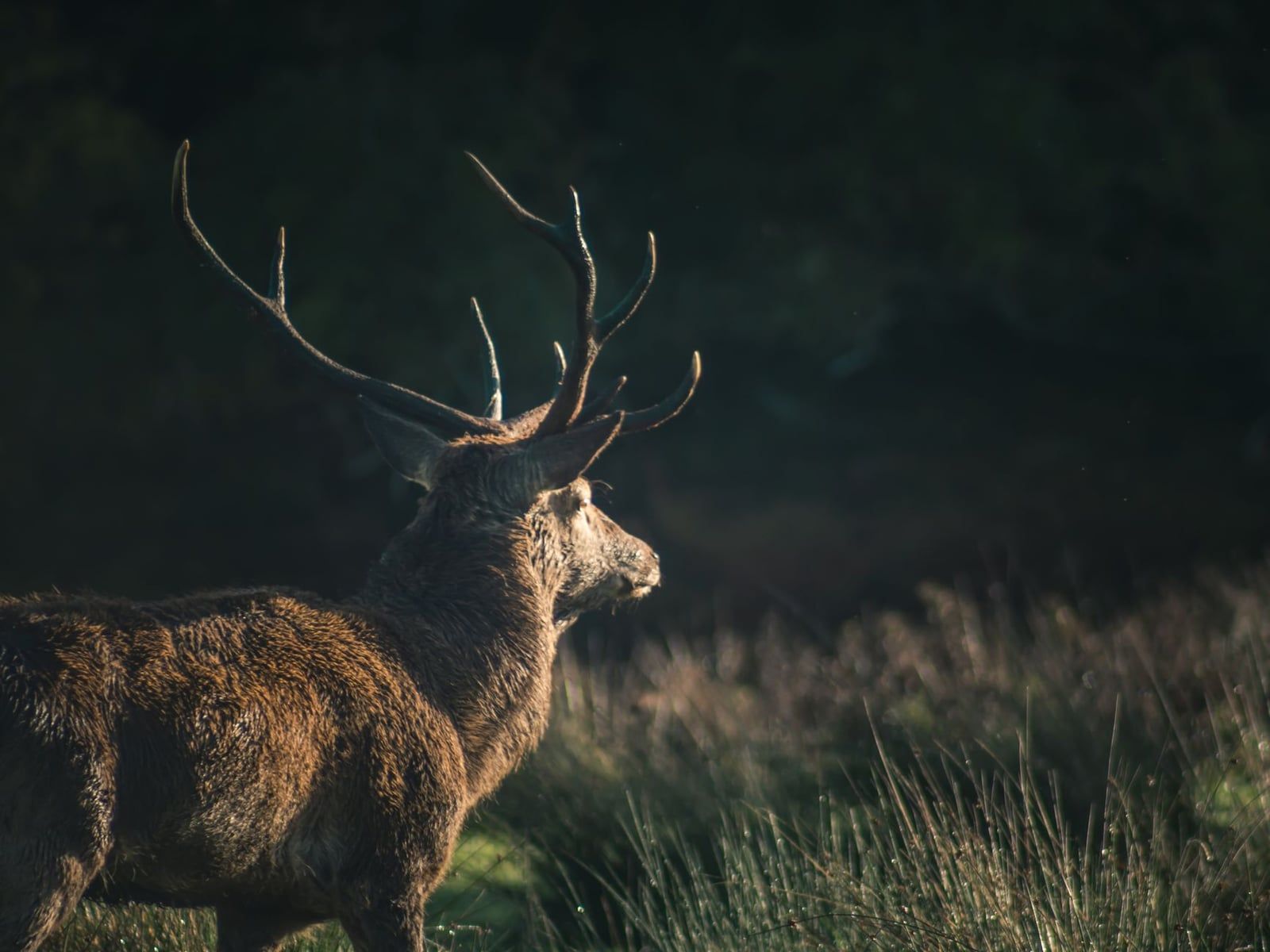
Ireland's only indigenous wild red deer herd on the mainland lives here, around 900 animals descended from stock present since Neolithic times, mostly seen on higher ground around Mangerton and Torc mountains. More than 140 of Ireland's 450-plus recorded bird species have turned up in the park too. After dark, Killarney's Dark Sky Preserve keeps light pollution low enough for genuinely dark stargazing, worth staying an extra night for.
Midges can be a nuisance on warm, still days, and ticks turn up off-trail, so tuck trousers into socks if you're heading into longer grass. Dogs are welcome but must stay on a lead throughout. Camping, campfires and barbecues are banned everywhere inside the park boundary.
Killarney town, a few minutes from the park entrances, has the widest choice of pubs, restaurants and hotels for an overnight stay. Kenmare, at the far end of the N71, makes a quieter base if you're continuing on toward the Ring of Kerry.
Frequently asked questions
Is Killarney National Park worth visiting?
Yes. Even a half-day loop of Ross Castle, Muckross House and Abbey, and Torc Waterfall is one of the strongest stops on a Kerry trip, and there's enough hiking and boating here to fill two days if you have them.
Is Killarney National Park free to enter?
The park itself is free and open around the clock to pedestrians. Attractions inside charge separately: Muckross House is €9 (€18 combined with the Traditional Farms), and Ross Castle's guided tower tour is around €5.
How much time do you need in Killarney National Park?
Half a day covers the core sights near town. A full day adds Torc Waterfall and the Gap of Dunloe. Two days let you fit in a longer hike or an attempt on Carrauntoohil.
Can you drive through Killarney National Park?
The N71 runs through the park connecting Killarney to Kenmare, but you can't drive around the heritage sites themselves. Park at Ross Castle, Muckross or Torc and continue on foot, by bike or by jaunting car.
Is the Gap of Dunloe part of Killarney National Park?
Technically it sits just outside the official boundary, though it borders the park directly and appears in almost every visitor's itinerary regardless.
What is the best way to get around Killarney National Park?
Walking, a rented bike on the marked cycle routes through Muckross, Knockreer and Ross Island, a jaunting car, or the hop-on hop-off bus, which covers most stops but skips the Gap of Dunloe.
Can you swim or kayak in Killarney National Park?
Swimming is possible at Muckross Lake's Goleen shore, though there's no lifeguard and the depth changes suddenly near the bank. Kayaking and canoeing are allowed on the lakes with a free permit and a power-washed vessel.
What is the best time of year to visit Killarney National Park?
April to October gives the mildest weather and longest daylight. The park stays open year-round, and each season looks noticeably different, from crowded summer trails to quiet, misty winter ones.