About All Tours Bike ToursHorse ToursRing of Kerry ToursJaunting Car Tours Directions Hours & Fees Guides
Find Tours 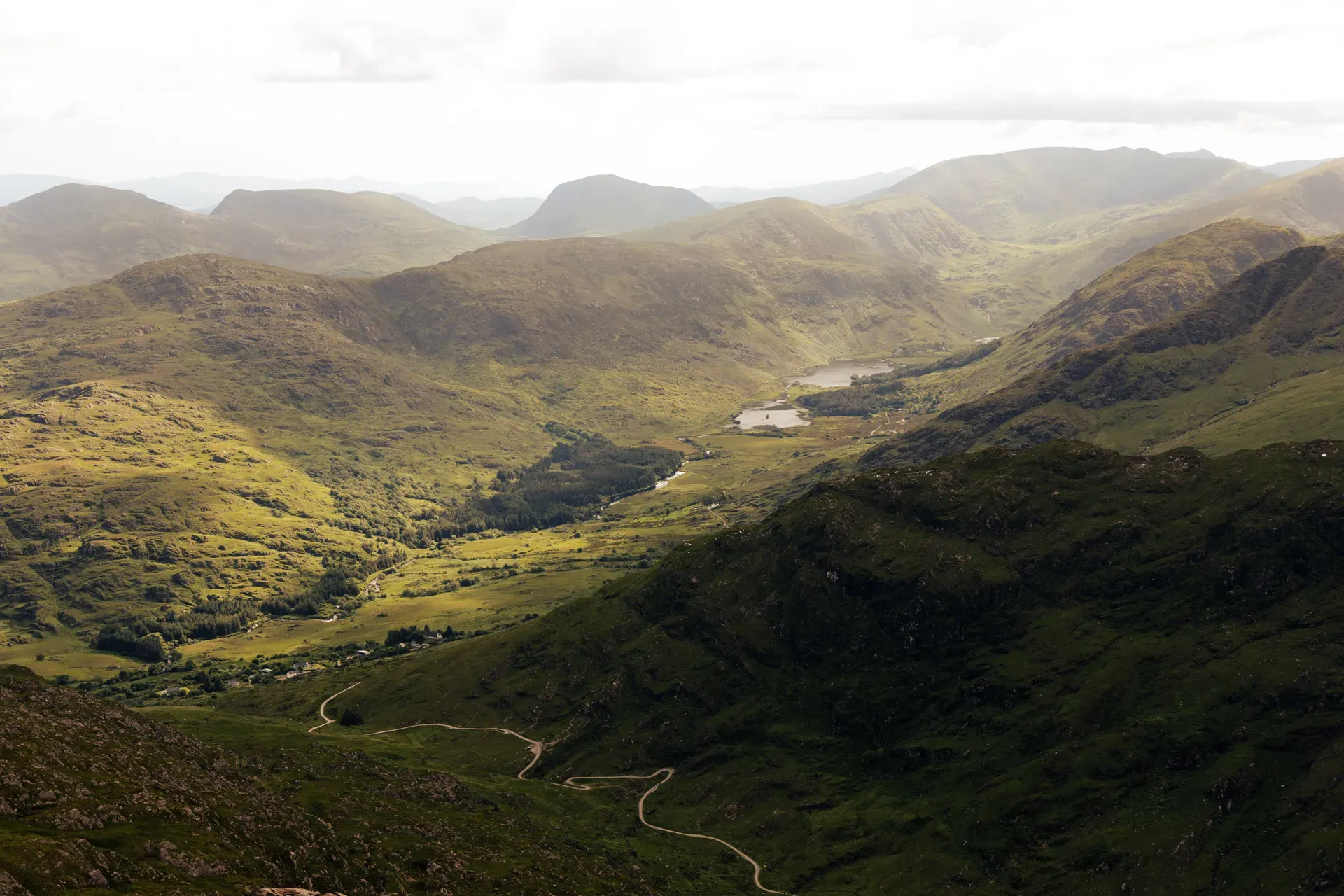
Killarney National Park covers 25,425 acres of lakes, mountains, and native woodland immediately southwest of Killarney town in County Kerry. It is Ireland's first national park and holds the country's only wild herd of native red deer on the mainland.
Ireland's first national park occupies 102.89 square kilometres of lakes, oak woodland, and mountain peaks directly southwest of Killarney town. The terrain shifts from the flat, paved paths of Killarney House Gardens to the steep, rocky slopes of the MacGillycuddy's Reeks. Three main lakes—Lough Leane, Muckross Lake, and Upper Lake—dominate the valley floor, covering nearly a quarter of the park's total area. Water levels fluctuate heavily based on the season. Heavy rain floods the lakeside trails and forces boat operators to cancel trips. Check the official NPWS site the morning you plan to visit.
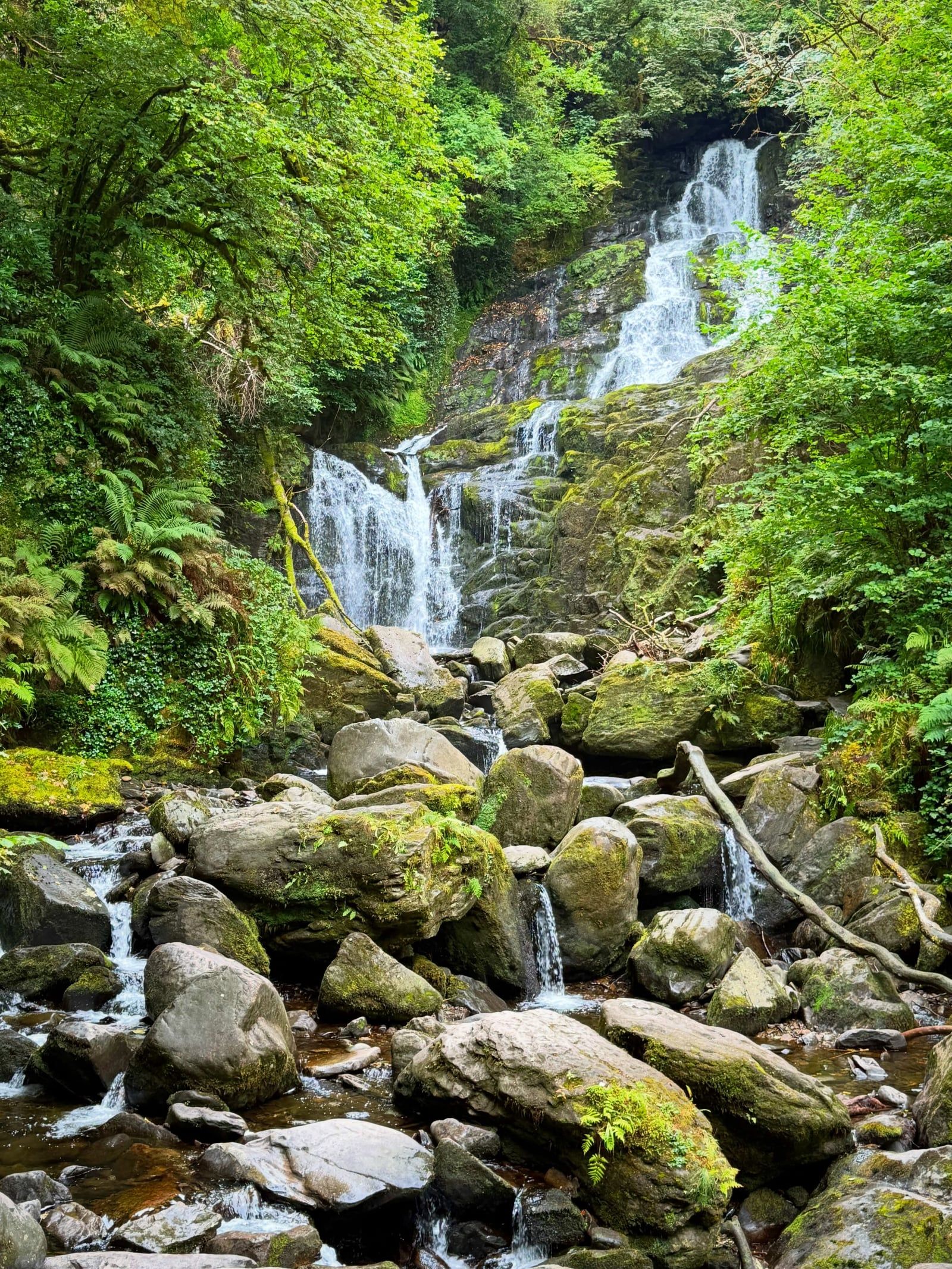
The park contains the country's most extensive remaining native forest. Reenadinna Wood on the Muckross Peninsula is one of only three limestone yew woodlands in Europe. The dense evergreen canopy blocks out most sunlight, leaving the forest floor bare except for a thick carpet of moss. A 700-strong herd of native red deer roams the upland heath and woodland edges. You'll hear the stags roaring during the autumn rut near Torc and Dundag. The 20-metre Torc Waterfall drops through dense oak trees just off the N71 road, fed by the Owengarriff River draining from the Devil's Punchbowl lake high above.
Most visitors stick to the 3.6-kilometre stretch between Killarney town and Muckross House. This creates severe traffic bottlenecks on the N71 in July and August. Skip the car. Rent a bicycle in town for €15 to €25 a day. The paved, shared-use tracks let you bypass the road traffic and connect Ross Castle, Muckross Abbey, and Torc Waterfall in a single afternoon.
The climate is heavily influenced by the Gulf Stream, resulting in mild, wet conditions year-round. This oceanic weather supports rare bryophytes and ferns that usually only grow in tropical zones. December through February brings short daylight hours and blustery, misty weather that turns the upland trails into bogs. Late spring and early autumn offer the best balance of dry footing and manageable crowds.
Human settlement in the Killarney valley dates back 4,000 years. Bronze Age miners extracted copper from the limestone shores of Ross Island on Lough Leane. They left behind some of the oldest known metal workings in northwestern Europe. Monks and chieftains followed in the medieval period. The ruins of Innisfallen Abbey sit on an island in the lower lake, founded in the 7th century by St. Finian the Leper. The 15th-century Muckross Abbey stands near the eastern shore. Local chieftains, including the O'Donoghues and MacCarthys, used the Franciscan friary as a burial ground. The roof is gone, but a massive yew tree still grows in the center of the cloister.
The modern park began as a private estate. Senator Arthur Vincent and his parents-in-law, Mr. and Mrs. William Bowers Bourn, donated the 4,300-hectare Muckross Estate to the Irish Free State in 1932. They made the gift in memory of Vincent's late wife, Maud. This transfer created the Bourn Vincent Memorial Park, Ireland's first national park. The state initially struggled to maintain the massive property, running it primarily as a working farm for decades. The government later acquired adjacent lands, including the former Kenmare Estate. This expanded the protected area to its current 25,425 acres.
The National Parks and Wildlife Service manages the grounds today. Their work focuses on habitat conservation and managing the impact of mass tourism. They reintroduced the white-tailed sea eagle to the area in 2007 after a century of extinction in Ireland. The birds now nest along the lake shores and feed on fish from Lough Leane. The park received UNESCO Biosphere Reserve status in 1981 based on its rare habitats.
Maintenance remains a constant battle against invasive species and weather. Rhododendron ponticum, introduced by Victorian gardeners, chokes out native oak saplings. It requires continuous clearing by volunteer crews using chainsaws and herbicide. Winter storms frequently bring down old-growth trees across the main walking routes. Check the trail conditions at the Killarney House Visitor Centre before starting the 7-kilometre Old Kenmare Road hike.
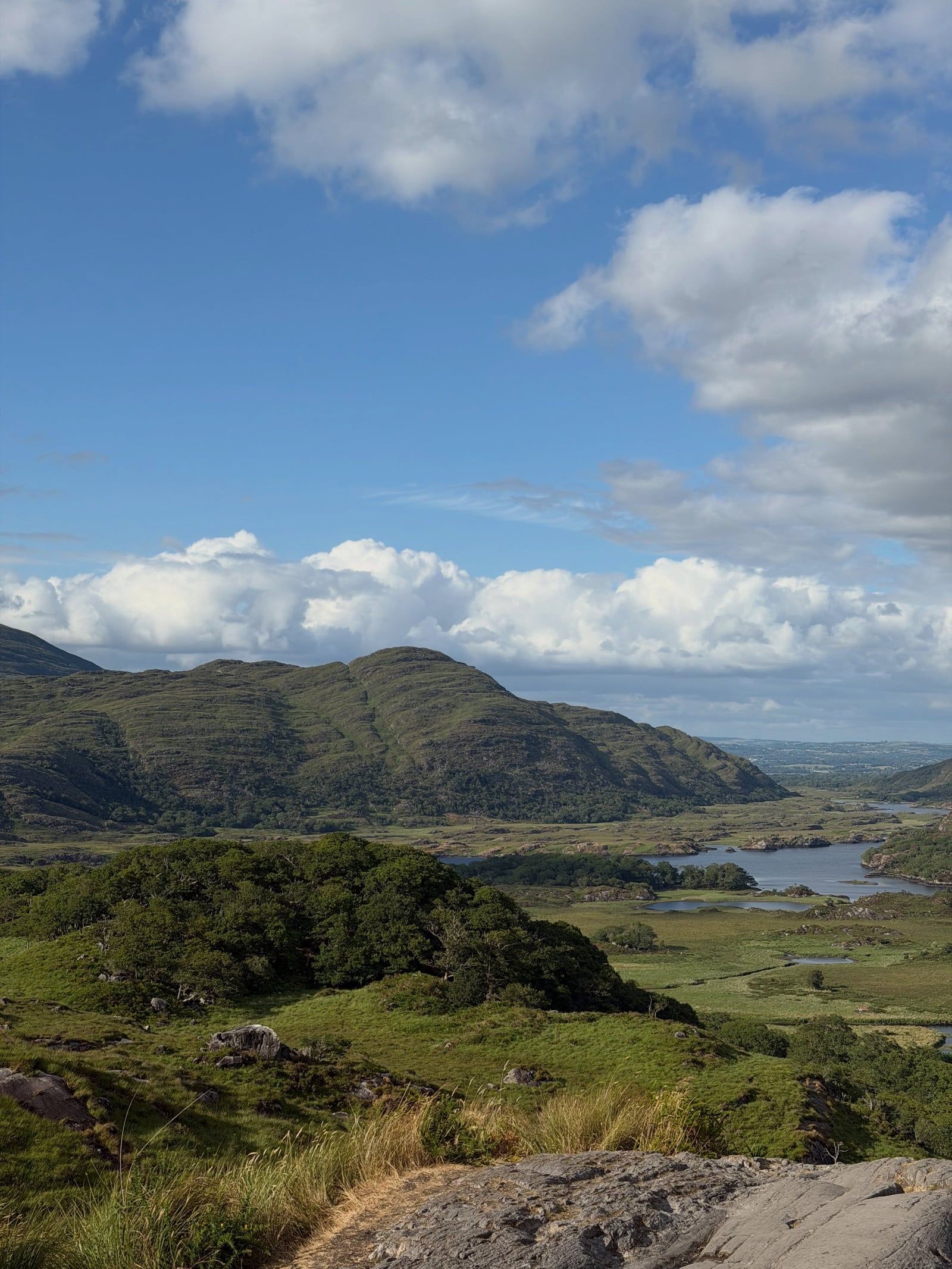
Three interconnected lakes form the core of the park. Lough Leane is the largest, holding Ross Castle on its eastern edge. This 15th-century tower house contains restored oak furnishings and acts as the main departure point for lake boat tours. Muckross Lake sits to the south, separated by a small peninsula. The water here drops suddenly to depths of 75 metres. The gently sloping Goleen shore attracts swimmers, but there's no lifeguard and inflatables are banned. Keep children within arm's reach. Upper Lake is the smallest and most isolated, accessible via a narrow channel called the Long Range.
Muckross House dominates the eastern lakeshore. Built in 1843 by the Herbert family, the Victorian mansion contains 65 rooms. The surrounding gardens include a sunken garden, a stream garden, and an extensive rockery carved out of natural limestone. You can walk the garden paths for free. Entry to the house costs €9.00 and requires a guided tour. Buy the joint €18.00 ticket if you also want to see the adjacent Traditional Farms, which replicate 1930s rural Irish life with working machinery and livestock.
The terrain rises sharply south of the lakes into the MacGillycuddy's Reeks and Purple Mountains. The Gap of Dunloe cuts a deep glacial mountain pass through this range just west of the park boundary. Walkers and traditional horse-drawn jaunting cars share the narrow, winding road through the gap, passing five small lakes connected by the River Loe.
The 5.6-kilometre Arthur Young's Walk crosses the Muckross Peninsula through the Reenadinna Wood. This trail exposes the rare limestone yew forest. The roots of the trees grip directly onto the bare, fissured limestone pavement. Wear waterproof boots. The rock gets extremely slick after rain. For higher elevation, the Old Kenmare Road winds 7 kilometres through upland woodland and blanket bog from the Torc Upper car park. The route uses timber boardwalks to cross the wettest sections and stepping stones over mountain streams.
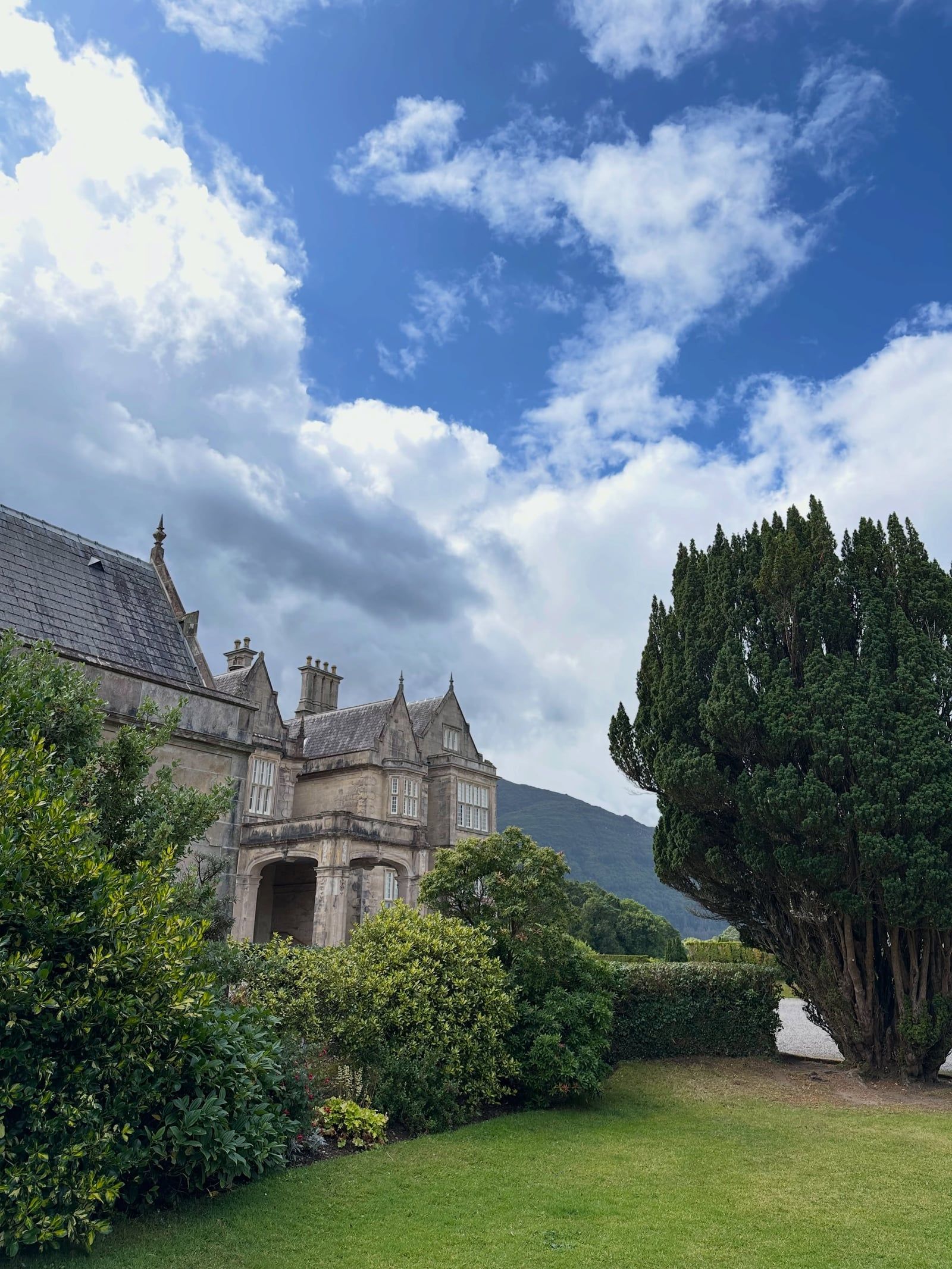
The Killarney valley holds a central place in Irish monastic history. The monks of Innisfallen Abbey wrote the Annals of Innisfallen between the 12th and 15th centuries. This manuscript recorded the history of Munster, documenting famines, wars, and the deaths of high kings. It remains a primary source for early medieval Ireland. The original text now sits in the Bodleian Library in Oxford, but the abbey ruins on Lough Leane still draw visitors tracing early Christian settlements.
Queen Victoria's 1861 visit transformed the area into a major tourist destination. The Herbert family spent years preparing Muckross House for her arrival, commissioning specially woven carpets and importing mirrors. Her ladies-in-waiting stopped at a vantage point on the N71 road to look over the three lakes. The spot is still called Ladies View. This royal endorsement popularized the lakes among wealthy British travelers. Local men began operating horse-drawn jaunting cars to transport these early tourists. The jarveys still drive these carriages today, passing down the trade and the specific routes through local families.
The park functions as a living laboratory for Irish ecology. It preserves the last remnants of the primeval forests that once covered the island. The isolation of the Killarney red deer herd means they have maintained a pure genetic line since the end of the last Ice Age, avoiding crossbreeding with introduced sika deer. Book a boat trip from Ross Castle rather than a bus tour to see the valley the way the early monks and Victorian travelers did.
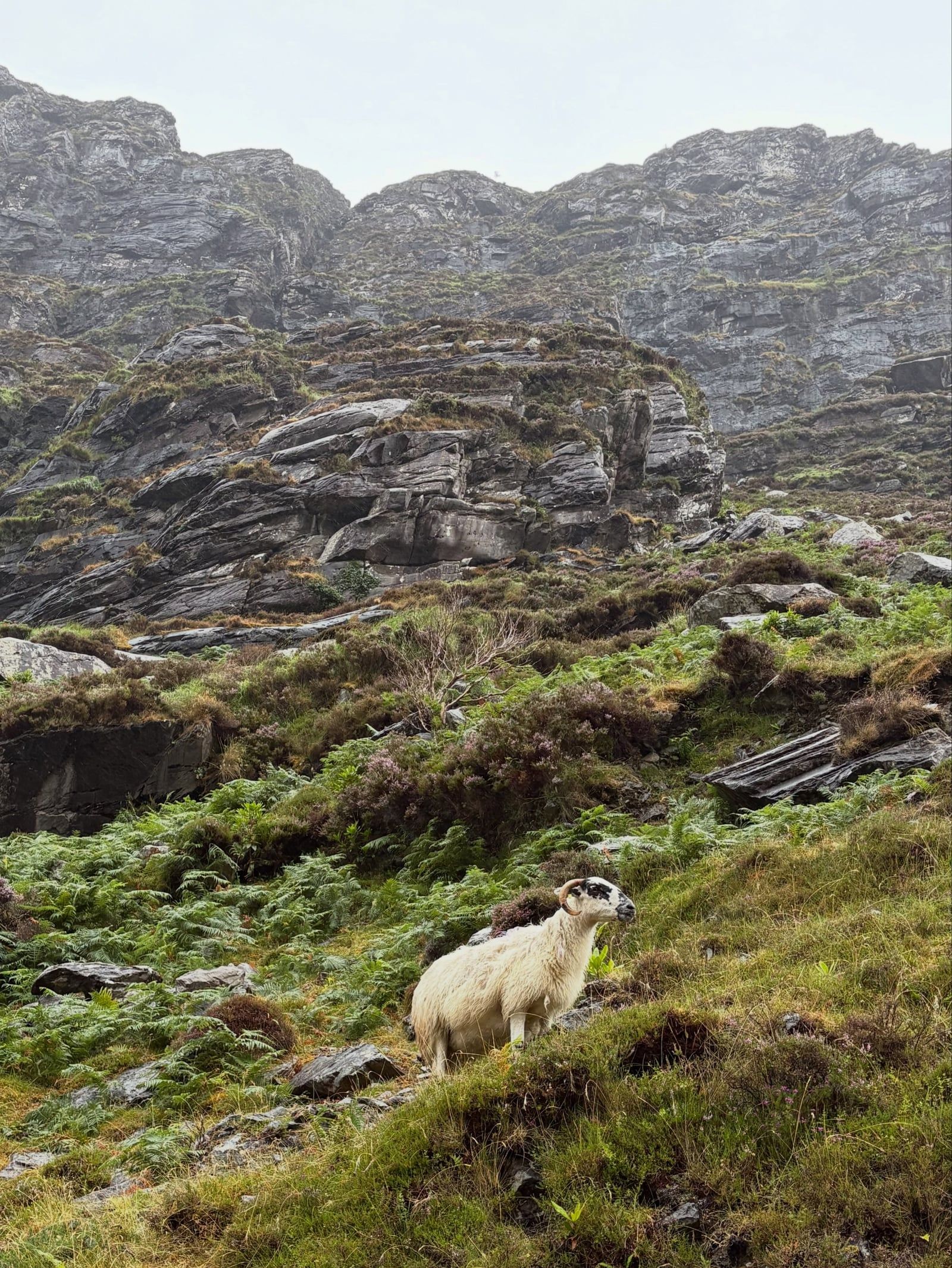
The park's red deer herd has lived in Ireland continuously since the end of the last Ice Age.
White-tailed sea eagles were successfully reintroduced here in 2007 after being extinct in Ireland for over a century.
Reenadinna Wood is one of only three pure yew woodlands in Europe growing directly on limestone pavement.
Muckross House underwent massive renovations, including weaving new carpets and importing mirrors, just for Queen Victoria's two-day visit in 1861.
The Annals of Innisfallen, a major chronicle of medieval Irish history, was written by monks on an island in Lough Leane.
The park is officially twinned with Glacier National Park in Montana, USA.
The shores of Lough Leane contain Ross Island, the site of the oldest known copper mine in northwestern Europe.
No, the National Park and its gardens are free to enter with 24-hour pedestrian access. Certain heritage attractions inside charge separate admission, such as Muckross House at €9.00 per adult.
The park allows 24-hour pedestrian access every day of the year. The gated gardens at Killarney House and Muckross House close at night, and the Visitor Centre operates from 9:15am to 5:15pm daily.
The park covers 102.89 square kilometres (25,425 acres). The terrain includes three large lakes, oak and yew woodlands, bogland, and mountain peaks.
Yes, the Goleen shore of Muckross Lake is a traditional bathing spot. There is no lifeguard on duty, the water depth changes suddenly, and inflatables are banned.
Dogs are permitted on all trails but must be kept under control at all times. Owners must follow the park's Dog Owners Code of Conduct to protect sensitive wildlife and ground-nesting birds.
Recreational drone use is banned throughout the park. Drones disturb nesting birds and other wildlife. Commercial drone use requires advance written permission from the park authorities.
Drive 305 kilometres via the M7 and N22, which takes about three and a half hours. You can also take a Bus Éireann coach or an Irish Rail train, which costs roughly €35 and requires a transfer in Mallow.
Rent a bicycle in Killarney town and ride the paved paths to Muckross House, Torc Waterfall, and Ross Castle. This loop takes four to six hours and avoids the heavy summer car traffic on the N71 road.
The park has surfaced, wheelchair-friendly tracks around Muckross and Knockreer, and an accessible restroom at the Visitor Centre. A local tour boat is adapted for wheelchair users, but many woodland trails are unpaved and muddy.
Cycling is allowed on marked park roads and paved tracks. Off-road cycling is prohibited to prevent damage to habitats. Cyclists must give way to pedestrians at all times.
Browse verified tours with free cancellation and instant confirmation.
Find Tours